
Book One · The Luna Strega Trilogy
1099
Blood of
the Lupa
the Lupa
☽
The 1000 Year Saga of the Luna Strega
From the Mountains of Sicily · To the Streets of Brooklyn
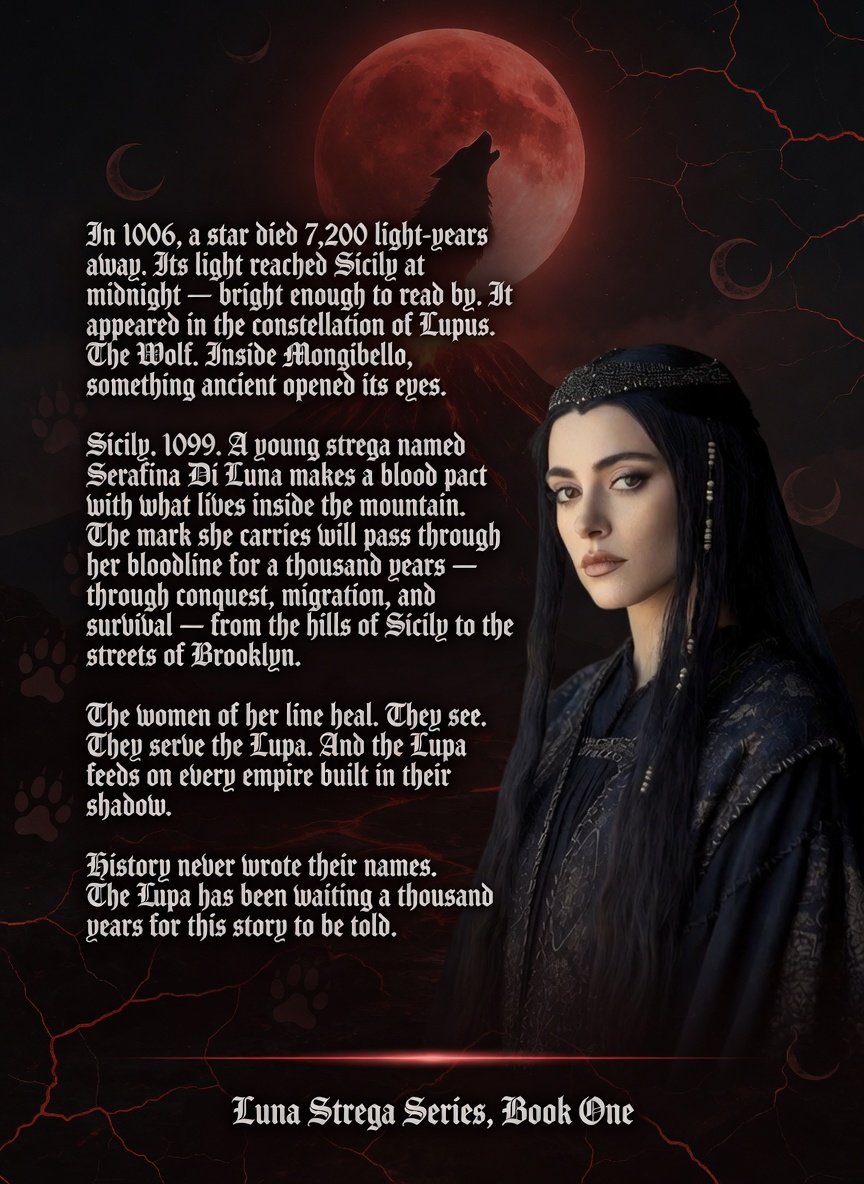
Book One · The Luna Strega Trilogy
The 1000 Year Saga of the Luna Strega
From the Mountains of Sicily · To the Streets of Brooklyn
In the shadow of Mount Etna, beneath a blood-red lunar eclipse, a desperate woman made a pact with the Lupa — the ancient She-Wolf of Sicily. That covenant, sealed in ash and wolf blood, would bind a family across ten centuries.
1099: Blood of the Lupa follows the Di Luna bloodline from the Norman siege of medieval Sicily to the tenements of Brooklyn — where the mark still burns, the old magic still breathes, and the wolf still howls in the blood of those who carry the gift.
Part historical saga, part supernatural thriller, part immigrant epic — this is a story of women who refused to break, and the ancient power that refused to let them.
A crimson eclipse. A desperate pact. The first mark burns into the Luna Strega line.
Ancient Sicilian folk magic — the Strega tradition, the Cimaruta, the old religion beneath the Church.
Ellis Island. Little Italy. Brooklyn. The magic does not leave the mountains — it crosses the ocean.
Three books. A thousand years. One unbroken bloodline — bound by fire, ash, and the ancient power that still sleeps inside Mongibello.
The mark does not choose the meek. It seeks the ones who have already survived the fire — and asks them to survive it again.
— 1099: Blood of the Lupa
Book One of the Luna Strega Trilogy
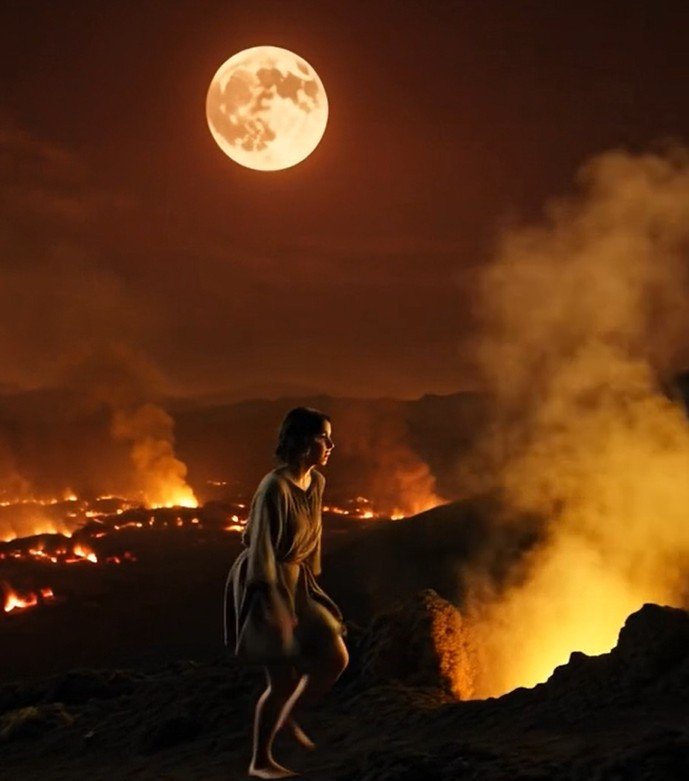
She climbed the mountain
before the eclipse had peaked.
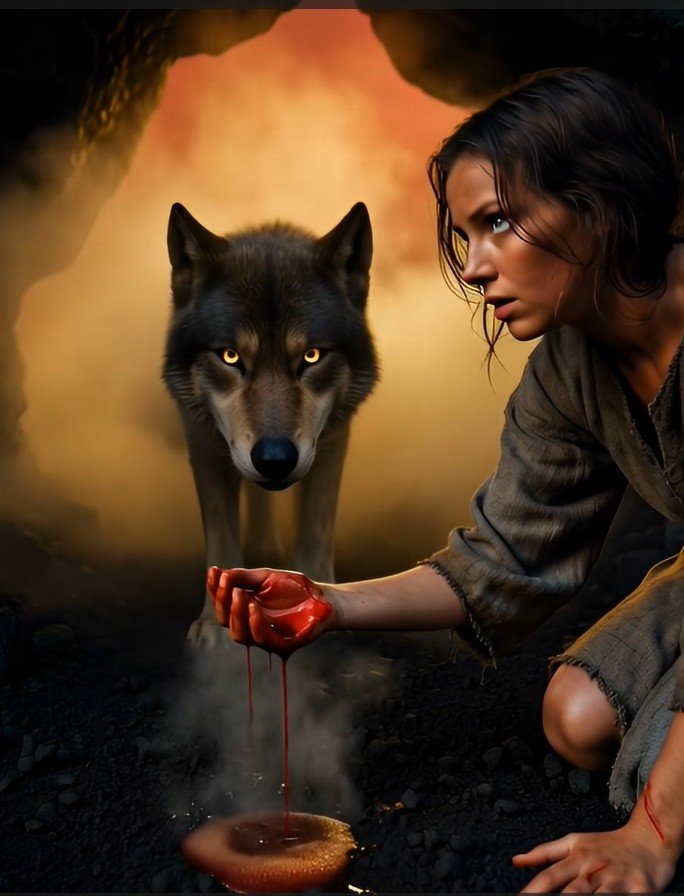
Inside the cave,
the Lupa was waiting.
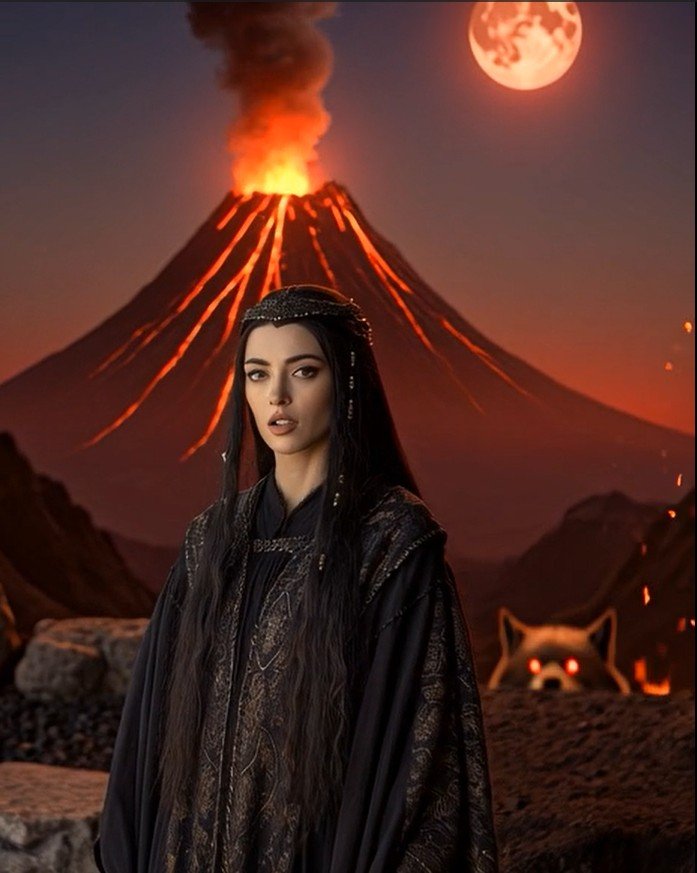
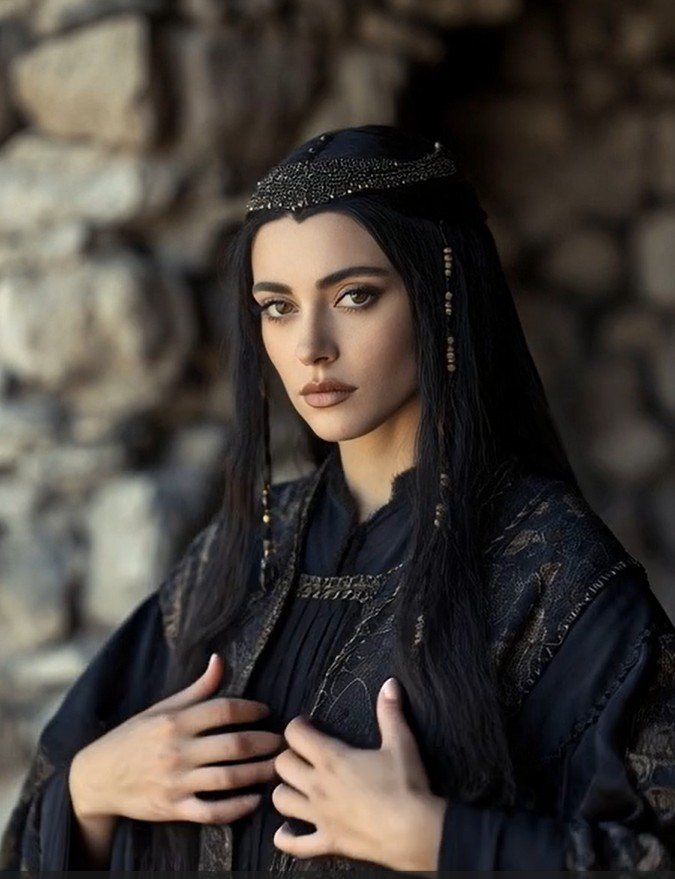
The mark was already
burning through her skin.
More visions
coming soon.
Upload as: Front_Cover.jpg · Back_Cover.jpg
The year 1099 was one of the most violent and consequential in the medieval world. In the east, the First Crusade reached its bloody climax. By June, a Crusader army had marched to the walls of Jerusalem — a city outside Christian control for more than four centuries. The siege lasted five weeks. On July 15, the walls were breached. What followed was a massacre. Tens of thousands dead. On July 22, the Kingdom of Jerusalem was established.
Pope Urban II — who had called the holy war into being — died fourteen days later. He never knew his war had been won.
Roger I of Normandy had completed his conquest of the island in 1091, wresting it from Arab rule after decades of brutal campaigning. By 1099, he governed a fractured, layered world — Norman lords over Arab farmers, Greek monks beside Latin priests, a population that had survived one invasion and was still learning what it meant to survive another.
His consolidation of power — and the terror it brought to those who still practiced the old ways — is where this story begins.
The Book of Enoch — older than the Bible, found among the Dead Sea Scrolls, suppressed by every church that encountered it — speaks of the Watchers: angels who descended to earth and taught women forbidden things. The hidden names of stars. The arithmetic of the cosmos. Among them was Sariel, who carried the most dangerous knowledge of all — the courses of the moon, her cycles and her power, the tidal pull she exerted over blood and tide and the minds of those sensitive enough to feel her.
One of those women was Lilith — the first woman, older than Eve, made from the same dust as Adam and refusing to lie beneath him. She left Eden on her own terms. And there, in the wilderness between the world God had ordered and the darkness that existed before He ordered it, Sariel found her. He gave her the secrets of the moon, the architecture of the cosmos, the forbidden knowledge no human was meant to hold.
What was born from that union had no name in any language.
Not angel, not demon, not human, not god. A hunger with intelligence. A will with no master. The thing that would spend millennia being called witch, demon, goddess, and devil by every civilization that glimpsed her and survived the glimpsing. She found her mountain before Sicily had a name and went into the fire because fire was the only thing on earth that matched what she was. The Greeks called her Artemis. The Romans called her Diana. The Christians called her demon and crossed themselves. All of them were wrong, and all of them were afraid, which amounted to the same thing.
For millennia she slept inside Mongibello, patient as stone, waiting.
A star had died 7,200 light-years away — and its light finally reached earth, blazing sixteen times brighter than Venus, bright enough to cast shadows at midnight, bright enough to read by in full daylight. Astronomers from China to Egypt to Europe recorded it in astonishment. They called it a guest star. It appeared in the constellation of Lupus — the Wolf.
Inside Mongibello, the daughter of Lilith and Sariel opened her eyes.
She woke like fire — complete, immediate, ravenous. The crescent mark she would one day press into the skin of her chosen daughters was Sariel's knowledge made flesh — the moon's secrets, passed through Lilith's defiance, distilled into blood. She was not a goddess to be worshipped or a demon to be exorcised. She was the organizing intelligence of survival itself. Every conqueror had arrived. Every conqueror had fallen. The Lupa had watched them all from inside the fire — patient, ancient, choosing her moment.
Serafina Di Luna, born under the crimson eclipse — the first Luna Strega drew breath, the Lupa awakened, dormant no more.
The Mountain of Fire and the Blood That Remembers It
Etna has worn many names across the centuries, but only one has outlived its rulers: Mongibello. It is more than a label. It is a verdict. To sailors coming in across the water, the volcano rose over the Sicilian and Calabrian coasts like something older than the island itself. Not a mountain, but the mountain.
Before the year 1000, Sicily's Arab rulers called the volcano Gebel al Nar — the mountain of fire. The name needed no explanation. With time it wore down to a single word, Gebel: the mountain. When the Normans took the island and pulled it back into the Latin Church, the Arabic was no longer understood. The mapmakers took Gebel for a proper name and wrote Mons Gebel, and the spoken dialect did the rest. Mons Gebel became Mongibello.
Some say the Normans knew exactly what they were doing. Mountain, mountain: Monte Monte. The mountain of mountains. It was a name that made the mountain's power plain.
Mongibello kept collecting stories. Some trace it to Mulciber — "he who softens the fire" — a Roman epithet of Vulcan, the smith-god said to work his forge beneath the mountain. Others read it as Monte Bello, the beautiful mountain, a nod to the landscapes on its slopes.
Some maps still print Etna Mongibello, but the name is nearly gone from daily use. You'll find it on shop signs, restaurants and guesthouses. Only one town still carries its echo, worn by centuries of speech into San Giovanni Montebello, on Etna's eastern flank.
The idea behind the name never left, though. The people who live on its slopes don't say "Etna." They say 'a muntagna: the mountain. The way they say it tells you everything. This is no scenery. It is a living presence, a mother or a moody lover, forgiven again and again for what she does. And a volcano, God knows, has plenty to be forgiven.
Mongibello survives in a few geological maps, where it names only the summit zone — the cluster of craters at the top. Four small peaks crowd the crown of the greater one, a mountain of mountains in miniature.
Sicilians have always known what the old mapmakers only half understood: some places are more than geography. They keep watch, and they keep memory.
The land that gave the Di Luna line its fire remembers everything.
The story of the Di Luna bloodline begins in the shadow of this mountain, in 1099 Sicily.
Read 1099: Blood of the Lupa on Amazon ☽1099: Blood of the Lupa is live. Get your copy now — or join the Luna Strega circle for early access to Book II and exclusive content about the Strega tradition.
No spam. No Black Hand. Just the bloodline.
Press inquiries, reader mail, and collaboration requests welcome.
Click anywhere outside to close